



TIARA
Traffic prediction using augmented reality
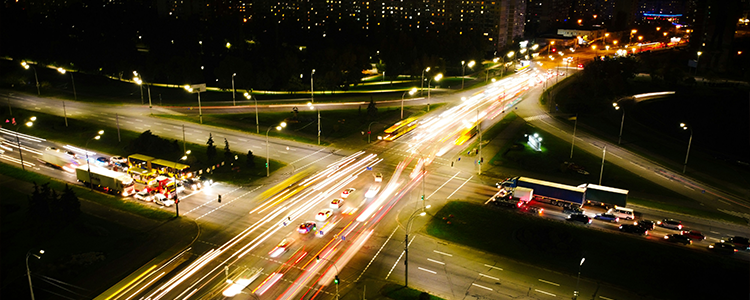
The project proposed and name “TIARA” is about tackling the problem of forecasting traffic congestions and making recommendations for optimal routes for car drivers, while delivering the “forecast message” using augmented reality technology.
Detailed description of project
Although modern navigation applications provide information on arrival time, current traffic situation and alternative routes, this data is mainly based on the current situation. However, traffic conditions can change significantly within a short period of time, making the information less useful for route planning.
This project explores the opportunity behind the big amount of data from various sources (radars, cameras, weather, public transport, etc.), stored into data hubs and deploying machine learning algorithms, to derive predictions for traffic.
Traffic prediction is about forecasting the volume and density of traffic flow, for the purpose of managing the movement of vehicles, to reduce congestion and recommend optimal routes.
TIARA aims to address UC1 “Traffic flow prediction & parking prediction” for the Pilot #2 “Human-Centred Twin Smart Cities Living Lab” which is conducted at Jätkäsaari harbour in Helsinki, Finland. one of the most congested areas in the city. The region is a key transportation hub, serving both passenger and freight traffic, with millions of passengers annually.
Increased traffic and ongoing urban development in the area have worsened conditions for pedestrians and passengers, while existing means of transport are not sufficient to address the challenges.
To support the research, an extensive data collection infrastructure has been installed, including sensors, radars, cameras, signal controllers and lidar systems, creating a living lab for the development and evaluation of traffic management solutions.
Type and scope of work provided
TIARA aims to include data from diverse data sources, that is maps, traffic information, weather, public transportation as well as road conditions, and then generate predictions for optical routes for drivers within a mobile application, based on machine learning algorithms.
The vision is that end users (drivers) will be able to use their smartphone to view in an Augmented Reality friendly way, alternative optimal routes (i.e., routes with less traffic and more parking spaces).
TIARA will address specifically the requirements scenarios identified as REQ_SC1_F05, REQ_SC1_F06.
Ημερομηνία:
January 2023